
IC Track vs. Management Track: How to Design Dual Career Paths
Forcing great individual contributors into management to keep growing costs you a strong IC and often gains you a reluctant manager. Here’s how to design parallel career tracks that both lead somewhere.
Todd from Tillego
October 15, 2026
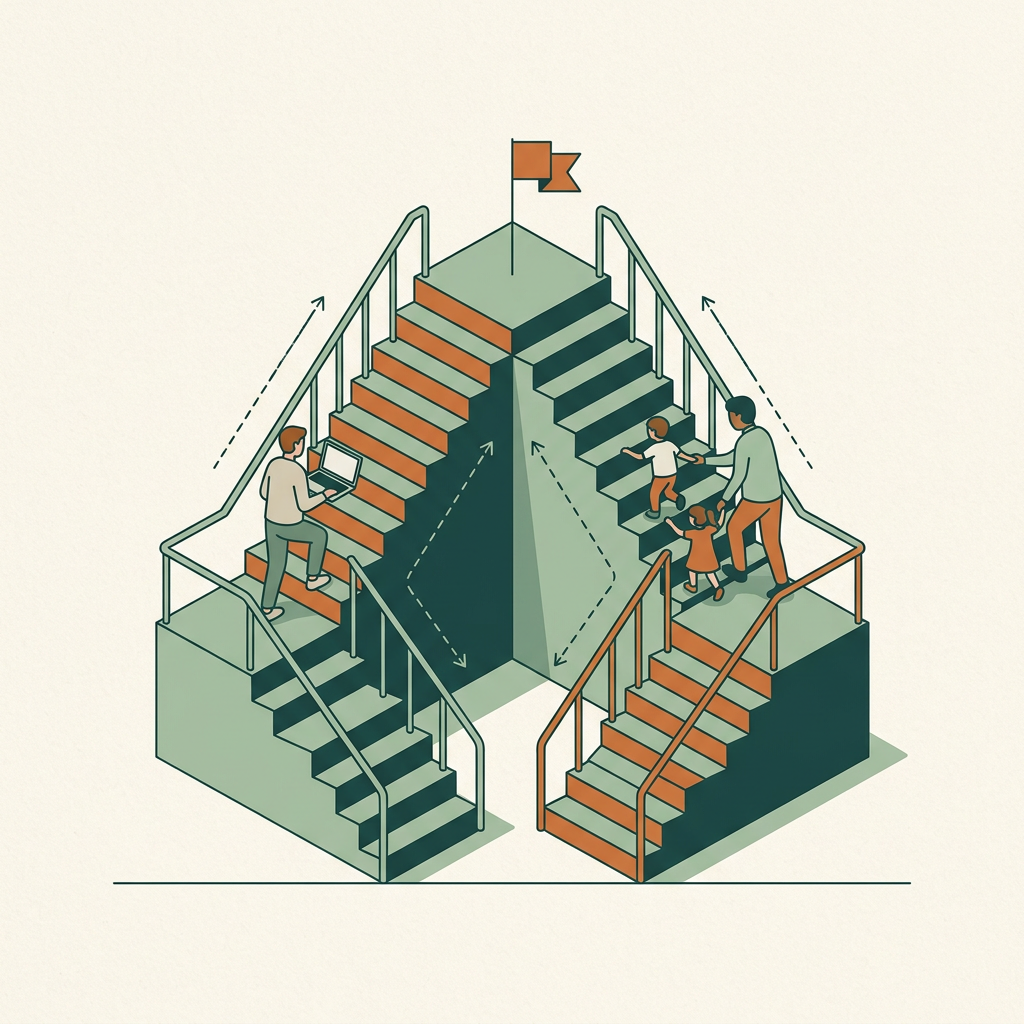
It’s a familiar story. Your strongest engineer, designer, or analyst hits the top of their level. The only way up is to manage people, so they take the role. Six months later they’re unhappy, their team is struggling, and nobody is doing the deep work they used to be brilliant at.
Management is a different job, not a promotion. A dual career path, with an individual contributor (IC) track alongside the management track, lets people keep growing in impact, scope, and pay without changing careers to do it.
Why a Single Ladder Breaks Down
When management is the only route to seniority, three things happen:
- You lose expertise. Your best practitioners stop practicing.
- You create reluctant managers. People take on direct reports for the title and pay, not because they want to develop others.
- Your experts leave. Senior ICs who don’t want to manage go somewhere that will let them grow as ICs.
What Each Track Is Really About
The two tracks aren’t "people work" vs. "real work." They’re two different ways of creating leverage:
The Management Track
Managers create impact through other people. Their core competencies are hiring, developing talent, setting team direction, running healthy processes, and giving feedback that lands. Their success is measured by how well their team performs and grows.
The IC Track
Senior ICs create impact through expertise and influence. At the higher levels they set technical or craft direction, solve the hardest problems, mentor others informally, and shape decisions across teams, all without direct reports. Their success is measured by the quality and reach of their work.
How to Design the Two Tracks
1. Share the Early Levels
Most teams keep a single ladder through the early and mid levels, where everyone is building core craft skills. The split typically happens around the senior level, once someone has the experience to make an informed choice about which kind of leverage they want to build.
2. Make the Levels Genuinely Equivalent
This is where most dual ladders fail. If a Staff IC isn’t paid, titled, and respected on par with an Engineering Manager, the IC track becomes a consolation prize and nobody believes in it. Map each IC level to a management level with the same compensation band and comparable scope of influence.
- Senior IC ↔ Team Lead or first-line Manager
- Staff IC ↔ Senior Manager
- Principal IC ↔ Director
3. Define Scope, Not Just Skill
At the senior levels of the IC track, the difference between levels is less about raw skill and more about scope: a Senior IC owns a project, a Staff IC influences a group of teams, a Principal IC shapes direction across the organization. Write those expectations down as clearly as you would for managers. Our guide to building a career ladder walks through how.
4. Allow Movement Between Tracks
Some people try management and discover it isn’t for them. Others spend years as a senior IC and then want to lead a team. Make it normal and safe to switch tracks in both directions, without it being treated as a demotion. Some of the best managers are former senior ICs, and vice versa.
Signs Someone Belongs on Each Track
When someone is deciding, these questions in a one-on-one can help:
- Do they get more energy from solving a hard problem themselves, or from helping someone else solve it?
- Are they willing to spend most of their week on meetings, coaching, and people issues?
- When the team succeeds without their direct involvement, does that feel rewarding or frustrating?
- Which leaders in the company do they most want to be like, and which track are those leaders on?
Management is a career change, not a reward. Give people a way to grow that doesn’t require them to switch jobs to get there.
The Bottom Line
A dual career path keeps your experts doing expert work and makes sure the people managing others actually want to. Split the tracks at the senior level, make them truly equal in pay and status, define each level by scope, and let people move between them. You’ll keep more of your best people, and get better managers in the process.
Frequently asked questions
- What is a dual career ladder?
- A dual career ladder offers two parallel growth paths after a certain level: an individual contributor (IC) track toward Staff and Principal roles, and a management track toward Manager and Director roles, with comparable scope and pay.
- At what level should the IC and management tracks split?
- Most companies split the tracks at the senior level (often L4 or L5), once someone has mastered the core craft and can choose between scaling impact through technical leadership or through people leadership.